
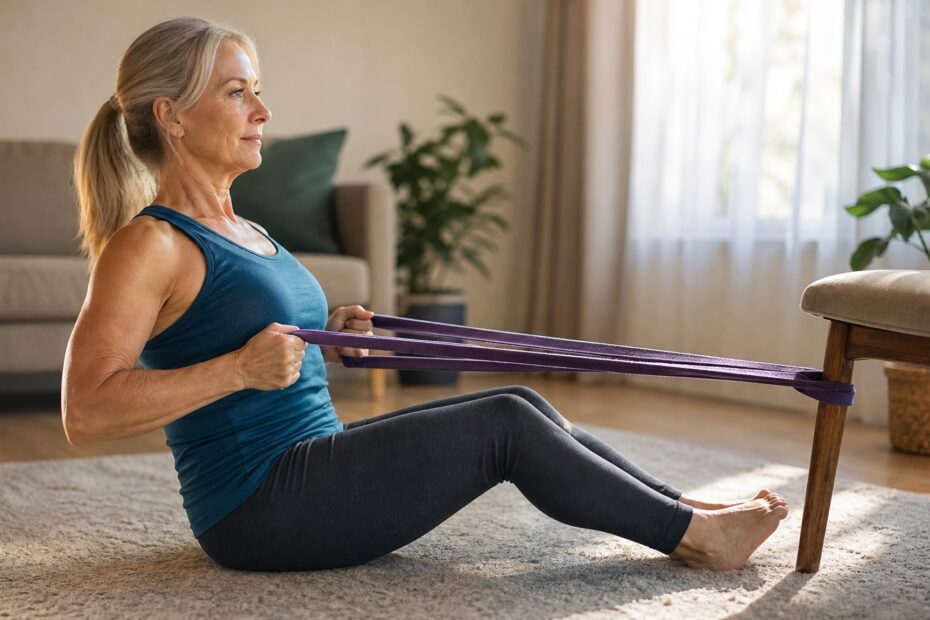
Your fifties are a pivotal decade. The fitness choices you make now shape your physical independence for decades. Rather than waiting for decline to force your hand, personal training for seniors over 50 at home lets you build the strength reserves you need to keep your current lifestyle and head off mobility problems before they start. This is preventative, not reactive: the goal is to preserve muscle mass and joint function while your body still has maximum capacity to adapt.
Why Your 50s Are the Critical Window for Preventative Fitness
Muscle mass starts to decline in your fifth decade unless you actively intervene with resistance training. That makes now the time to build a strength baseline, before age-related loss gets harder to reverse. Your body still responds well to new stimulus right now, so you can bank functional strength as insurance against the frailty people often associate with later years. Our training for seniors over 60 leans heavily on maintaining what you already have and managing existing conditions. Programming for your fifties is different: it’s about building new tissue and correcting movement patterns before they break down.
Effective fitness programming for your 50s combines progressive strength work with mobility practice and balance-focused movement. Cardio alone won’t do it. Cardiovascular health matters, but it doesn’t protect bone density or preserve the type II muscle fibres you rely on to stand up from a chair or catch yourself during a stumble. Strength training delivers those specific benefits, and walking or swimming can’t replace it.
Starting now protects your independence far more than trying to rebuild lost ground later.
Essential Strength Training Exercises for Over 50s at Home
Trainers consistently recommend foundational movements for over-50s clients, things like bodyweight squats, hip thrusts, and modified push-ups, because they mirror daily functional patterns while going easy on the joints. None of them need gym machines or complex setups, which makes them ideal for personal training for seniors over 50 at home, where space and equipment are often limited. A bodyweight squat teaches your hips and knees to work together safely. That translates directly to easier rises from chairs and safer trips up and down stairs.
Hip thrusts build the posterior chain without loading the spine vertically, which matters if you carry tension in your lower back or have a history of disc issues. Modified push-ups against a wall or raised surface build pushing strength while keeping your shoulders in a safer position than floor push-ups demand. Each movement targets a specific vulnerability common in midlife bodies, so the effort you put in shows up as real-world capability.
Generic senior fitness programs often fall back on seated exercises or very light resistance bands. These rarely give you enough stimulus to actually maintain muscle in your fifties. Home-based personal training works differently: it meets you at your real functional level and progresses exercises based on your individual capacity, not an arbitrary age-based guess about what you can handle.
How Mobile Personal Trainers Adapt Programs for the 50s Demographic
A mobile personal trainer that travels to you checks your current mobility baselines and adjusts every session around your body as it actually is right now, whether that means working around perimenopausal fatigue, stiff joints, or years away from structured exercise. You can’t get that kind of individual adaptation from generic online videos or group classes built for a broad audience. Your trainer watches how you move in your own environment and picks up on compensation patterns and restrictions that might go unnoticed anywhere else.
Safety improves a lot when a professional corrects your form in your own living room instead of across a crowded gym floor where attention is split a dozen ways. Accountability comes built in, too: someone arrives at your door expecting you, which removes the mental back-and-forth that usually derails solo workout plans. Fitness Inside Out’s mobile trainers have served Australian clients since 2001, bringing equipment and expertise straight to homes to cut out gym intimidation and travel friction for over-50s clients.
You get programming that respects your current limits while steadily pushing past them.
Structuring a Sustainable Home Workout Plan Without Equipment
Consistency beats intensity every time when you’re building sustainable fitness habits in your fifties. Aim for shorter sessions done regularly rather than occasional exhausting efforts that leave you sore and ready to quit. Two to three resistance sessions a week gives you enough stimulus to maintain and gradually build muscle, without wrecking your recovery or crowding out the rest of your life. Each session should mix compound movements, dedicated mobility work, and moderate aerobic activity, balanced to match your energy and your goals.
Progressive resistance means you gradually raise the difficulty through leverage changes, tempo adjustments, or added load as your body adapts, so you keep making gains instead of stalling out. Moderate aerobic activity supports your heart and helps you recover between strength sessions, but it should complement your resistance work, not replace it. Dedicated mobility practice keeps your joints moving through their full range and cuts injury risk, which matters more as tissue gets less elastic with age.
Short, regular sessions beat sporadic, high-intensity efforts that end in burnout or injury.
Online vs In-Home Coaching: Choosing the Right Format for Your Lifestyle
Face-to-face mobile training gives you tactile feedback and immediate form correction that virtual sessions can’t match. That makes it the better choice if you’re restarting fitness after a long break or managing specific joint concerns. Having a trainer physically present keeps you moving safely through unfamiliar patterns during that early, riskier learning phase, and it tends to lift your motivation too, helping you push through the moments of doubt or fatigue that might otherwise end a session early.
Virtual personal training is a solid option for women over 50 who need schedule flexibility, as long as the trainer understands age-specific physiological changes and can cue your form effectively through a screen. If your work hours are unpredictable, or you live outside the usual service areas, online coaching removes the logistics that might otherwise stop you training consistently. Read our detailed comparison of online versus in-person training to work out which format suits your circumstances and comfort level.
The best format is whichever one you’ll actually stick with, month after month.
Overcoming Common Barriers to Fitness After 50
Fear of injury often stops people cold when they return to exercise in their fifties, especially if they’re carrying memories of past gym failures or a rough rehab experience. Professional guidance takes the guesswork out of it: supervised progression builds your confidence alongside your capability, so you never attempt a movement your body isn’t ready for. Time poverty hits nearly every mid-career professional and parent, but having a trainer come to your home cuts out commute time and makes fitting exercise into a packed week actually achievable.
Past gym failures usually trace back to environments that were never built for your demographic or your goals, and that creates a mental link between exercise and discomfort or embarrassment. Home-based training breaks that link by putting you in a familiar, private space, where the focus stays on your progress and nowhere else. If you’re coming out of your forties and want gender-specific guidance, strength training at home for women over 40 covers the hormonal shifts that start well before fifty.
Professional support turns anxiety into structured, manageable steps.
Taking the First Step Towards Ageless Strength
Investing in personal training for over 50s during this decade is an investment in your future independence. It gives you the physical reserves to stay active well beyond retirement age. The window for preventative strength building is open right now, but it narrows with every year of inactivity. Booking a consultation lets you talk through your needs, your current limitations, and your specific goals with a trainer who understands exactly what your fifties require.
Getting started is simple when the trainer comes to you, which clears away every logistical excuse between intention and action. Your future self depends on the choices you make today.
Frequently Asked Questions
What is the best home workout for a 50-year-old woman?
The best workout combines compound strength exercises like squats and modified push-ups with dedicated mobility work and moderate cardio, tailored to account for perimenopausal hormonal changes. Consistency matters more than intensity, so two to three sessions weekly that you can sustain long-term outperform sporadic intense efforts. A personalised assessment determines which specific exercises suit your current joint health and fitness baseline.
What are the 5 exercises everyone over 50 should be doing?
Bodyweight squats, hip thrusts, modified push-ups, single-leg balance work, and thoracic mobility drills address the most common functional deficits in this age group. These movements target lower body strength, posterior chain activation, upper body pushing capacity, fall prevention, and spinal mobility respectively. Each exercise should be scaled to your individual ability and progressed gradually under professional supervision.
How many times a week should a 50 year old woman lift weights?
Two to three resistance training sessions per week provides adequate stimulus to maintain and build muscle mass while allowing sufficient recovery time for midlife bodies. Spacing sessions with at least one rest day between them prevents overtraining and supports tissue repair. Frequency may adjust based on your recovery capacity, existing fitness level, and other physical demands in your daily life.
What is a good home workout plan for a 50-year-old man?
An effective plan includes progressive resistance training targeting all major muscle groups twice weekly, supplemented by mobility work and moderate aerobic activity. Focus on compound movements that preserve functional strength for daily tasks rather than isolation exercises aimed purely at aesthetics. Programming should account for any existing joint issues or cardiovascular considerations common in this demographic.