
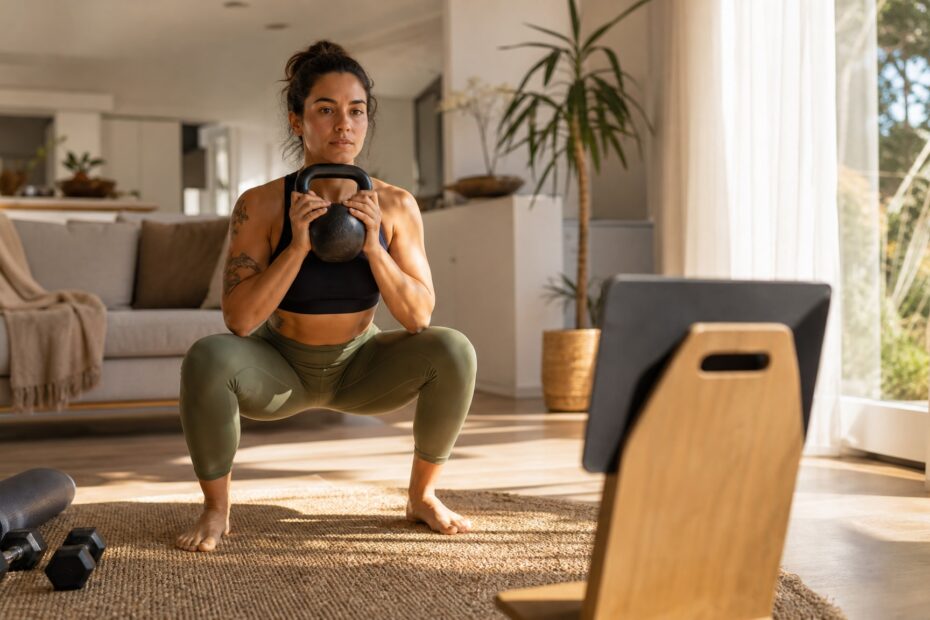
Choosing between online personal training and in-person coaching isn’t a simple binary for busy Australians juggling careers, families, and health goals. The right format depends on your current season of life, how much hands-on correction you need, and how much friction you can tolerate before you start skipping sessions. Fitness Inside Out has delivered mobile and online personal training across Sydney, Melbourne, Brisbane, Central Coast, and Wollongong since 2001, adapting the format to you rather than forcing you into one model. Consistency beats theoretical perfection every time.
Understanding Online Personal Training in Australia
Virtual personal training means live, coach-led sessions. Your trainer watches your movement in real time and adjusts your program on the spot. That’s a world away from app-based workout programs or pre-recorded video libraries, where you follow generic instructions with no one watching. Live online PT sessions give you real-time verbal and visual cueing; in an asynchronous video library, a form error can go uncorrected for weeks and quietly turn into an injury or a stalled plateau.
You get the same programming expertise as an in-person visit, delivered through a screen, so you can train from anywhere with stable internet and enough floor space. This removes travel time completely and makes scheduling far more flexible if you’re working from home one day and travelling the next. It’s not a passive experience where you press play and hope for the best. It’s an interactive appointment that demands your presence just as much as a face-to-face session would.
The practical difference between live online personal training and app-based programs comes down to human oversight and immediate adaptation to your day. An app can’t tell you your squat depth is off because you slept badly, and it can’t regress an exercise mid-set when your shoulder starts pinching. A qualified online personal trainer in Australia gives you that safety net while keeping the convenience that gets you showing up week after week.
The Reality of In-Person Mobile Personal Training
Mobile personal training brings professional coaching straight to your home, local park, or workplace, no crowded gym floor at peak hour required. That’s fundamentally different from traditional gym-based training, where you adapt to fixed equipment and rigid opening hours. Here, the environment adapts to you. You cut the commute, the childcare juggling, and the mental load of prepping for a public workout space, often the exact things that cause a well-intentioned fitness plan to fall over.
Your trainer arrives with everything needed for a full session, turning whatever space you have into a functional training zone built around your goals and limitations. This works particularly well for parents who can’t leave young kids unattended, shift workers with irregular schedules, or older adults who find gym environments overwhelming. The benefits of mobile personal training go beyond convenience: they build a routine anchored in your actual daily reality, not an idealised version of it.
In-person visits also allow for tactile cueing and physical adjustments that no camera angle can replicate. That matters for complex movement patterns or rehab work. Your trainer can feel muscle activation, check joint positioning by hand, and add resistance or assistance so you move safely and effectively. This hands-on element builds confidence faster than verbal instruction alone, especially when you’re learning new exercises or returning to activity after injury.
Comparing Live Online PT Sessions vs Home PT Visits
Digital sessions offer unmatched logistical ease. You can keep momentum during business trips, school holidays, or weeks packed with back-to-back meetings. Train at 6am before the household wakes, or at 9pm once the kids are asleep, without worrying about trainer availability or travel time. That convenience comes at a cost, though: no physical touch, and no nuanced read of your environment the way an in-person visit gives you.
Home PT visits deliver better form correction through direct observation and manual guidance. That matters if you’re managing pain, recovering from surgery, or rebuilding foundational strength after years of inactivity. Your trainer can spot compensation patterns a webcam might miss and adjust your setup so your furniture or flooring doesn’t compromise the movement. For clients over 50 or those managing chronic conditions, initial in-person assessments establish safe movement baselines before you move to supervised online maintenance.
Neither format beats the other outright. Each serves a different phase of your fitness journey, sometimes a different week within the same month. You might need hands-on coaching to learn proper deadlift mechanics, then maintain that pattern safely through virtual check-ins once it’s ingrained. Weighing convenience against coaching needs takes honest self-assessment about where you sit on the skill and confidence spectrum right now, and knowing that spot will shift over time.
A detailed comparison of online versus in-home formats can help clarify which elements matter most for your situation.
Why a Hybrid Model Often Beats Choosing One Format
Committing rigidly to either online or in-person training ignores the fact that your schedule, energy, and physical needs shift constantly through the year. Hybrid clients frequently switch to live online sessions during high-travel weeks, then back to in-person home visits once schedule stability returns, keeping momentum without re-onboarding or losing progress. That flexibility heads off the all-or-nothing thinking that derails so many fitness efforts when life gets complicated, which it always does eventually.
You can move between online and face-to-face sessions with the same trainer, so your programming and the relationship stay continuous no matter the format. Your trainer knows your history, your limitations, and your long-term goals whether they’re standing in your lounge room or on your laptop screen. No re-explaining your background to a new practitioner, no restarting a program every time your circumstances change.
Hybrid training accepts that some weeks demand maximum convenience while others call for intensive hands-on attention, and both are valid parts of sustainable progress. You might book three in-person sessions a month to refine technique and one online session to hold the habit during a busy stretch, then flip that ratio when work ramps up. The goal is consistent engagement with professional coaching, not loyalty to a format that no longer serves you.
This suits people who want autonomy but still need accountability, structure, and expert guidance to stay on track.
Matching Personal Training Options to Your Lifestyle
Postnatal recovery typically benefits from initial in-person visits to check pelvic floor function, diastasis recti, and postural changes before you move to online maintenance sessions. New mums often like training at home with the baby nearby, but the early weeks need careful screening that’s hard to do reliably through a screen. Once you’re cleared and confident with the foundational movements, virtual sessions let you keep progressing without adding childcare logistics to an already demanding phase.
Over-50s strength building and fall prevention work the same way: start with a hands-on assessment to set safe loading parameters and check movement competency, then move to regular online check-ins. Older adults often feel more comfortable learning new exercises in private rather than in a public gym, and mobile visits respect that while keeping things safe. Virtual sessions then give you the frequency you need for neuromuscular adaptation without multiple weekly commutes.
Shift workers and frequent travellers often find a pure in-person model unsustainable, because rosters and locations keep changing. Hybrid or mostly-online arrangements tend to stick for the long run instead. These clients need trainers who understand circadian disruption and can program around fatigue rather than forcing a standard morning or evening slot. Personal training in Australia has to bend to these realities if it’s going to work for people whose jobs run on irregular hours.
Online training isn’t suitable for acute injury rehab that needs manual therapy or complex neurological retraining requiring physical contact and specialised equipment. Recognising that limit protects you from wasted time and potential harm, and points you toward the right allied health support until you’re ready for supervised exercise progression. An honest read of where you sit on this spectrum saves frustration and gets you results faster.
Finding the Best Online Personal Training Australia Offers
Check that any online personal trainer in Australia holds current accreditation through a recognised body such as Exercise & Sports Science Australia or Fitness Australia. That’s your baseline for competency and insurance cover. Registration alone doesn’t guarantee remote-delivery skill, so ask specifically about their experience running live online sessions, as distinct from just uploading programs to an app. Plenty of competent gym trainers lack the communication skills and technical setup to coach well through a screen.
Look for providers who spell out their live interaction standards: camera positioning guidance, real-time feedback protocols, a plan for when the tech fails. A vague promise of “online support” often just means an asynchronous messaging system that leaves you guessing about form and intensity for days. The best online personal training Australia offers runs with the same professionalism and structure as in-person services, not as a cut-price afterthought.
Experience with remote or mobile delivery matters, because coaching someone you can’t physically adjust takes different observational skills and verbal precision than floor-based training does. Ask how they handle clients with limited equipment, poor lighting, or patchy internet, these practical snags show you how mature their operation really is. A trainer who’s never worked outside a controlled gym environment may struggle when your reality doesn’t match their assumptions.
Our guide to choosing a qualified personal trainer helps you weigh up credentials and compatibility beyond the surface-level marketing.
Taking the Next Step Towards Consistent Fitness
Assess your current schedule honestly: travel commitments, family responsibilities, energy patterns, all of it, before you decide which format deserves your investment right now. Past failures with gym memberships often came down to structural mismatches, not personal weakness, and understanding why gym memberships often fail busy Australians can stop you repeating that pattern with a new format. Your next attempt deserves better alignment with how your life actually runs today, not how you wish it did.
Book a free consultation to talk through whether online, mobile, or hybrid personal training fits your current lifestyle and goals, no obligation attached. That conversation lets us understand your situation and recommend the format most likely to hold up through the disruptions that are bound to come. You can explore live online personal training options or talk through mobile visits, depending on what looks most workable for you.
Consistency comes from removing friction, not from piling willpower onto an arrangement that doesn’t fit. The right format feels manageable even in a bad week, and it’s worth being upfront about what you can realistically maintain before you commit to one.