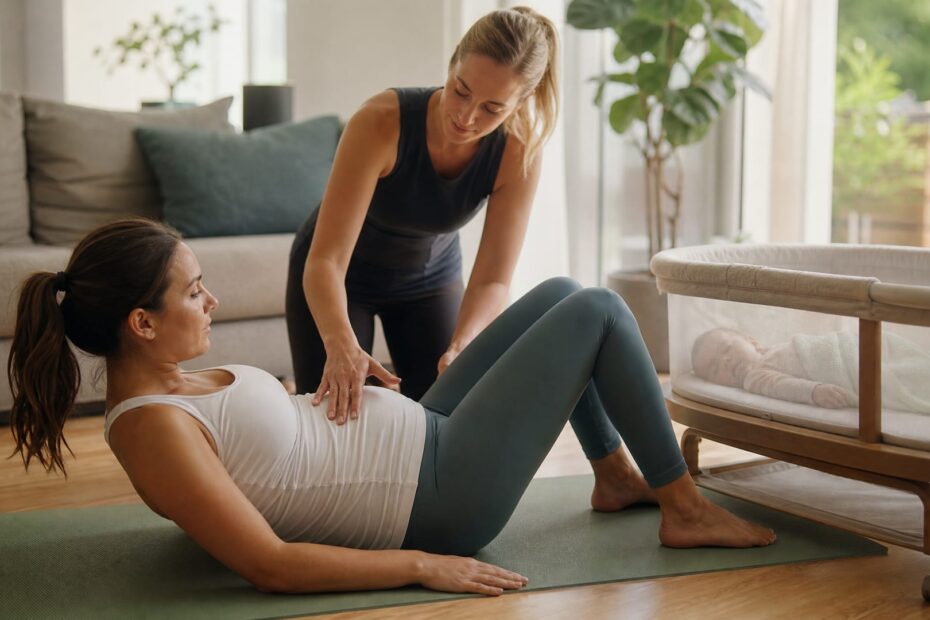
Returning to fitness after childbirth means dealing with physical recovery, unpredictable routines, and the mental load of new parenthood, all at once. Generic online advice often overlooks these realities. Many mothers are left unsure where to start safely, or how to fit exercise into a day dictated by infant needs. A postnatal personal trainer in Sydney bridges this gap by bringing professional guidance to your door. No travel, no childcare juggling, and every movement suits your specific stage of recovery.
Why In-Home Postnatal Training Works for Sydney Mums
Leaving the house with a newborn derails even the best intentions for self-care. You deserve a fitness solution that adapts to your current reality, not one that demands you reshape your whole day around a gym timetable that ignores early motherhood.
Removing Childcare and Travel Barriers
Arranging childcare just to attend a forty-five-minute workout is its own kind of exhausting. Mobile personal training removes that hurdle because the session happens in your living room, backyard, or local park while your baby sleeps or plays nearby. This works particularly well as personal training for busy mums who can’t predict their availability more than a few hours out. Your focus stays on recovery and strength, not on coordinating drop-offs, finding parking, or rushing through traffic to make a class.
Training Around Unpredictable Nap Schedules
Infant sleep rarely lines up with fitness class timetables, which makes consistency hard for new mothers. A mobile personal trainer in Sydney works on your timeline instead, arriving when your baby typically settles rather than forcing you to interrupt a nap window. If your little one wakes mid-session, the workout pauses, no penalty, no awkwardness, while you feed or settle them, then it picks up where you left off. That flexibility turns exercise into a manageable part of your day rather than another source of stress.
Safe Exercise After Having a Baby: A Progressive Approach
Postnatal exercise programming needs a specific assessment of pelvic floor integrity and abdominal separation before any load-bearing work begins. That’s what separates it from standard adult fitness training. Jumping into high-intensity workouts too soon risks long-term dysfunction, so safe exercise after having a baby prioritises foundational stability over calorie burn or quick aesthetic change.
Pelvic Floor Safe Workouts at Home
Your pelvic floor has been through significant trauma regardless of birth method, and it needs targeted rehab before handling impact or heavy loads. Pelvic floor safe workouts at home start with breathwork and activation drills that restore the neuromuscular connection without loading pressure onto healing tissue. A qualified trainer that comes to your home watches your form in real time to catch compensation patterns a generic video tutorial simply can’t. That hands-on oversight means you build internal support correctly before progressing to squats, lunges, or running.
Rebuilding Core Strength Without Risk
Diastasis recti affects a large share of postpartum women and calls for modified core engagement to avoid making the separation worse. Traditional crunches and planks often make it worse, so your program swaps these for functional movements that build transverse abdominis activation into everyday patterns instead. Strength training at home for women in the postnatal phase focuses on restoring tension across the midline through controlled loading, not isolation exercises that ignore how the body actually works as a whole. You rebuild strength you can actually use: lifting your baby, carrying groceries, managing the house, without straining tissue that’s still healing.
Week-by-Week Recovery Milestones
Recovery follows a biological timeline, not an arbitrary six-week clearance date. The early weeks focus on breathing, gentle mobility, and reconnecting with deep stabilisers before any external resistance or cardio demand comes in. As your body shows readiness through specific functional benchmarks, your trainer increases complexity and intensity based on what they observe, not what the calendar says. This kind of pacing prevents the setbacks that happen when mothers push too hard, too soon, chasing outdated return-to-exercise timelines.
What to Expect from Mobile Personal Training for New Mums
Professional postpartum personal training at home takes the intimidation out of public gyms while still delivering clinical-grade programming, in the environment where you’re most comfortable. You get expert coaching without packing a gym bag, arranging transport, or worrying about judgement from strangers while your body is still changing.
Equipment-Free Sessions in Your Living Room
Mobile trainers bring the resistance bands, mats, and light weights with them, so new mothers don’t need to buy equipment or find a gym. Your living room floor becomes a fully equipped studio for the session, then goes back to being family space once the trainer packs up and leaves. Effective postnatal workouts run on smart movement selection and progressive overload, not expensive machines, so you get results with minimal gear in a limited space. It also gives you a chance to try different equipment before you ever consider buying any for home use.
Flexibility When Baby Needs You
Motherhood doesn’t pause for a scheduled workout, and neither does in-home training. If your baby cries, needs feeding, or needs a nappy change mid-session, your trainer waits while you handle it, no clock ticking down while you do. Sessions can be shortened, extended, or rescheduled at short notice if illness or some other disruption comes up, so your recovery stays on track regardless. It’s an approach built around the fact that caring for an infant is dynamic, unpredictable work.
Tailored Post Pregnancy Fitness Programs Across Sydney
Every birth creates its own recovery requirements, and a generic template can’t cover all of them. Fitness Inside Out builds programs around birth type, recovery stage, and energy levels rather than running everyone through the same protocol.
Caesarean recovery means healing from major abdominal surgery on top of postpartum hormonal change. It calls for scar tissue mobilisation and a gradual return of core function that looks nothing like a vaginal birth protocol. Vaginal births bring their own considerations, around perineal healing, pelvic organ support, and hip stability, that need just as much specialised attention. Trainers check your specific recovery markers, surgical or not, before prescribing anything, so the program matches your tissue tolerance and where your nervous system actually is. Energy availability swings hard depending on sleep, breastfeeding demands, and mental health, so sessions adjust intensity on the day rather than sticking rigidly to a plan written a week earlier.
This customisation runs across Greater Sydney, from the Northern Beaches to the Inner West and beyond, with trainers who’ve worked with the particular challenges urban and suburban mothers face. Whether you’re in a compact apartment or a house with a backyard, your program makes creative use of whatever space you’ve got. No facility access required.
Building Strength and Energy Without Gym Intimidation
Returning to fitness after growing and birthing a human is a psychological adjustment as much as a physical one. Many mothers feel vulnerable about their changed bodies, and worry about getting exercises wrong in public, surrounded by people who look confident and experienced.
Regaining Confidence in Your Body
Private home training gives you the psychological safety that speeds up physical progress, because performance anxiety and comparison simply aren’t in the room. You learn proper technique somewhere mistakes become teaching moments, not sources of embarrassment. That protected space lets you reconnect with what your body can do, gradually, rebuilding trust in movement patterns that might feel unfamiliar after months of pregnancy. Confidence comes from competence, earned through patient coaching, not from being thrown into a gym culture that rarely makes room for postnatal realities.
Functional Fitness for Motherhood Demands
Motherhood asks for athletic-level strength applied to repetitive lifting, carrying, bending, and holding positions that will strain an unprepared body. Functional fitness turns gym concepts into practical capacity: picking up toddlers, getting the pram up stairs, holding your posture through a long feeding session. Your trainer designs movements that mirror what parenting actually demands, building resilience exactly where you need it. That relevance is what makes the exercise feel worthwhile rather than indulgent, tying effort directly to a better quality of life and less injury risk during everyday caregiving.
Choosing the Right Postnatal Personal Trainer in Sydney
Not every personal trainer has the specialised knowledge to work safely with postpartum bodies, even with a general fitness certification behind them. Checking specific credentials protects you from a trainer who might unintentionally prescribe the wrong exercise, or miss the warning signs of incomplete healing.
Qualifications That Matter for Postpartum Care
A qualified postnatal personal trainer in Sydney should hold specialised certification in pre- and postnatal exercise prescription, beyond the standard Certificate III or IV. Look for credentials from a recognised body, such as the Australian Institute of Fitness Pre and Postnatal Specialisation, or an equivalent women’s health certification that shows real study in this area. These programs cover diastasis recti assessment, pelvic floor dysfunction, caesarean recovery protocols, and breastfeeding considerations, topics a general training course skips entirely. Asking about continuing education in women’s health tells you whether a trainer keeps their knowledge current or is coasting on a certificate from years back.
Experience with New Mothers and Recovery
Theoretical knowledge only goes so far without practical experience working with postpartum clients across different recovery stages and birth types. Ask a potential trainer how many postnatal clients they currently coach, and what modifications they typically make for different presentations. Experienced trainers work with physiotherapists, obstetricians, and lactation consultants when red flags come up or progress stalls.
Fitness Inside Out has run mobile personal training across Sydney since 2001, with trainers experienced specifically in adapting sessions for postnatal clients in their own homes. That means your trainer is drawing on decades of case studies, not learning on the job with your recovery.
Start Your Safe Postnatal Fitness Journey Today
Professional guidance during postnatal recovery prevents costly mistakes and gets you back to feeling strong and capable sooner. You don’t need to wait until you feel ready to leave the house, or until your baby sleeps through the night, before starting appropriate rehab work.
Enquire about postnatal training to talk through your specific situation, ask about safety protocols, and book an initial consultation in your own home. Our team works with mothers across Greater Sydney, Central Coast NSW, Illawarra NSW, Greater Melbourne, and Brisbane, with programming built around your birth experience and your current life. Take the first step and you’re working with people who understand that rebuilding strength after childbirth deserves patience, expertise, and convenience built around your reality as a new mother.