Search “how to lose weight” and you’ll get two kinds of answers. One is a diet article telling you to eat more vegetables. The other is a gym ad with a model who looks nothing like you. Neither one shows up at your house to help you actually do the work.
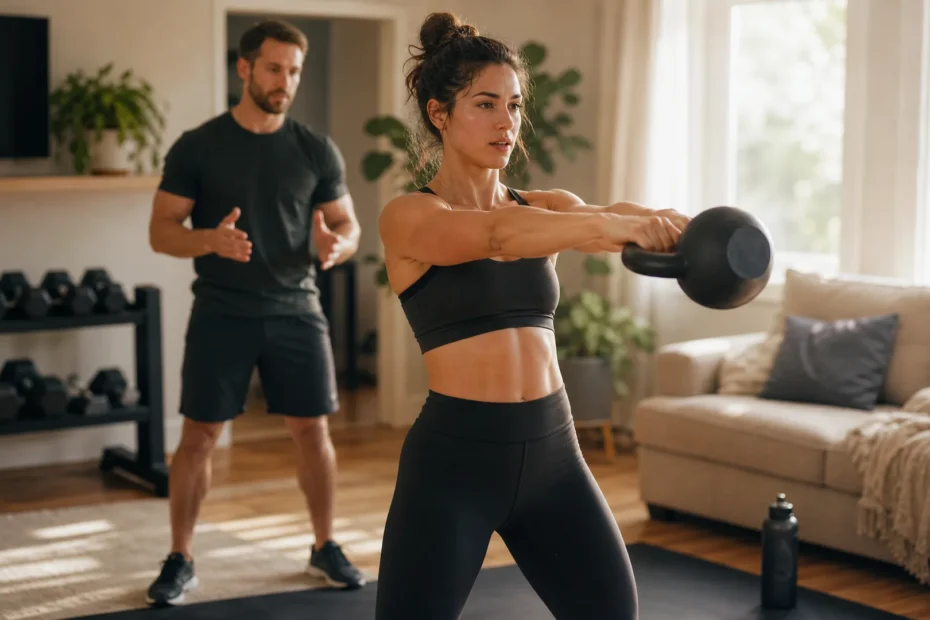
That’s the gap a personal trainer for weight loss at home fills. You get real coaching, real accountability, and a program built around your life. Not a generic meal plan or an intimidating gym floor.
Why a Personal Trainer for Weight Loss at Home Actually Works
A home-based program works because it removes the two things that quietly kill most weight loss attempts: friction and guesswork. You don’t have to drive anywhere, find parking, or figure out which machine to use. Someone qualified is already there, ready to go, with a plan for that session.
Accountability: the missing link in most weight loss attempts
Most people don’t fail at weight loss because they lack information. They fail because no one checks in when motivation dips. A trainer who turns up at your door on a set day, at a set time, changes that.
You can’t skip a session by pretending you’ll “go tomorrow.” The appointment is already in your diary, and someone is counting on you to be there. That single shift in accountability is often the difference between another failed attempt and steady, visible progress.
Diet articles vs gym ads: why neither solves the whole problem
Diet content tells you what to eat but rarely helps you build the habit of moving your body consistently. Gym marketing sells intensity and transformation photos. It skips over the fact that many people simply don’t want to train in front of strangers, or don’t have time to travel to a gym.
A mobile personal trainer sits between these two extremes. You get structured exercise programming and light nutrition guidance, delivered in a space where you already feel comfortable. It’s worth understanding the benefits of mobile personal training before deciding whether it’s the right fit for your goals.
What an In-Home Personal Trainer Weight Loss Program Looks Like
An in-home personal trainer weight loss program isn’t a watered-down version of a gym session. It’s built around a different location, with the same core structure: assessment, goal-setting, and progressive training over weeks and months.
A typical mobile PT session structure
Most sessions follow a similar rhythm. Your trainer starts with a quick check-in on energy, sleep, and how the week has gone. Then you move into a warm-up, followed by the main training block, and finish with a short cool-down or mobility segment.
A typical at-home session might combine a bodyweight strength circuit in the living room with an interval cardio finisher in the backyard or local park. The exact mix shifts week to week as your fitness improves, so the sessions never feel stagnant.
How programs are tailored to your home, schedule and starting fitness level
Your trainer assesses what space you actually have, a living room, a garage, a small courtyard, or a nearby park, and builds your program around it. They’ll also factor in your current fitness level, any injuries, and how much time you realistically have each week.
This matters most for people juggling work and family. Fitness Inside Out has run mobile and online personal training across Sydney, Central Coast, Wollongong, Melbourne and Brisbane since 2001. That track record, now well over two decades, means trainers have programmed at-home weight loss results for a wide range of starting points and home setups, not just ideal ones.
At-Home Cardio and Strength Training Without Equipment Excuses
One of the biggest myths about home training is that you need a rack of dumbbells and a treadmill to lose weight. You don’t. You can train both strength and cardio effectively with bodyweight moves and a small amount of portable kit your trainer brings along.
Bodyweight strength moves that build lean muscle
Squats, lunges, push-ups, and core holds all load your muscles enough to build strength without any equipment at all. Building lean muscle matters for weight loss because more muscle mass supports a higher resting metabolism. Your body works harder even when you’re not training.
Your trainer will progress these moves as you get stronger, adding tempo changes, single-leg variations, or resistance bands, so plateaus don’t happen. If you want a starting point to try between sessions, a no-equipment home workout routine is a practical way to stay consistent.
Cardio options that fit small spaces and busy schedules
Cardio at home doesn’t mean running laps around your block for an hour. Short interval circuits, step-ups, shuttle runs in a driveway, or a fast-paced bodyweight combo can all raise your heart rate in a space the size of a garage.
Combining strength and cardio in the same session is one of the most efficient ways to drive fat loss. It builds muscle while also improving cardiovascular fitness. Your trainer decides the balance each week based on your goals and how your body is recovering.
Setting Realistic Weight Loss Goals With a Personal Trainer
Anyone promising rapid, dramatic weight loss is selling you a short-term result that rarely lasts. A trainer’s job is to set goals you can actually sustain, and adjust them as your life and fitness change.
Why sustainable, gradual progress beats crash diets
Sustainable fat loss tends to come from consistent, moderate weekly progress rather than dramatic short-term drops. That’s why trainers focus on habit-building over quick fixes. Crash diets and extreme workout spikes often lead to burnout, injury, or the weight simply returning once the intensity can’t be maintained.
A trainer will set a pace that fits your body, your schedule, and your stress levels. Not a number pulled from a magazine cover.
Tracking progress beyond the scale
The scale is only one measure, and it’s often the least reliable one week to week. Trainers also track strength gains, how your clothes fit, energy levels, sleep quality, and how you recover between sessions.
As life gets busier (a new work project, school holidays, travel) your trainer adjusts the plan rather than expecting you to force the same routine regardless of circumstances. That flexibility is part of what keeps people showing up months later, not just for the first few weeks.
Nutrition Basics That Support Your At-Home Training
A personal trainer isn’t a dietitian, and a good one will tell you that upfront. What they will do is reinforce the everyday habits that make your training actually pay off.
Simple habits trainers reinforce alongside workouts
Portion control, enough protein, and consistent meal timing are the basics most trainers will check in on regularly. None of this requires a strict meal plan or cutting out entire food groups.
Instead, it’s about small, repeatable habits: a protein source at each meal, fewer liquid calories, and eating slowly enough to notice when you’re full. These habits compound over weeks, working alongside your training rather than competing with it.
Choosing the Right Mobile PT for Weight Loss in Sydney, Melbourne or Beyond
Not every trainer who says they’ll “come to your home” has real experience programming for fat loss. It’s worth asking a few direct questions before you commit to a package.
Questions to ask before you commit
Ask how they structure a typical block of sessions, and how they measure progress beyond the scale. Ask what happens if you need to reschedule, and whether they offer options like 1-on-1, 2-on-1 with a partner, or online coaching if your location or schedule changes.
It’s also worth checking their experience with clients similar to you, busy professionals, parents, or people returning to exercise after a long break. If you’re still weighing up your options, a guide on how to choose a personal trainer in Australia covers the key questions in more detail.
Why local, come-to-you coaching removes common weight loss barriers
Clients who have lapsed on traditional gym memberships often find that having a trainer arrive at their door removes the two biggest barriers to consistency: travel time and intimidation. There’s no drive across town, no waiting for equipment, and no self-consciousness about being watched by strangers.
This is especially relevant for parents managing school runs and work schedules. Programs built for personal training for busy mums in Sydney show how sessions can be structured around nap times, school pick-ups, and the general chaos of family life.
If you’re based in Sydney specifically, a mobile personal trainer in Sydney can work around suburbs across Greater Sydney, the Central Coast, and Illawarra. The same come-to-you model runs across Greater Melbourne and Brisbane too.
If in-person sessions aren’t practical for your location or schedule, online coaching is a genuine alternative rather than a compromise. Structured online personal training options still give you the accountability, programming, and check-ins that drive results. They just happen over video instead of in your living room.
The model that works best combines expert programming with a trainer who fits into your life, not the other way around. For a broader look at how this style of coaching operates, the personal trainer that comes to your home model explains the full range of services available.
If you’re ready to stop choosing between generic diet advice and intimidating gym culture, book a free consultation or trial session with a Fitness Inside Out mobile personal trainer. You’ll get a program built around your home, your schedule, and your actual starting point, with someone showing up to make sure it happens.