Finding a fitness routine that sticks often comes down to removing friction, not adding more willpower. For busy Australian adults juggling careers, family, or recovery needs, the traditional gym model fails for a simple reason: it demands travel time and rigid scheduling that life doesn’t allow. Choosing between online personal training vs in-home personal training isn’t about finding a superior method in the abstract. It’s about identifying which delivery model fits your current reality, so you can stay consistent over the long term.
Fitness Inside Out has delivered mobile and online coaching across Sydney, Melbourne, Brisbane, Central Coast, and Wollongong since 2001, adapting to client needs without gym reliance. That experience points to one thing: professional guidance works best when it fits into your existing week, whether that means a trainer arriving at your door or connecting via live video while you travel. Both approaches skip the membership barrier, but they solve different logistical problems.
Understanding Your Personal Training Options in Australia
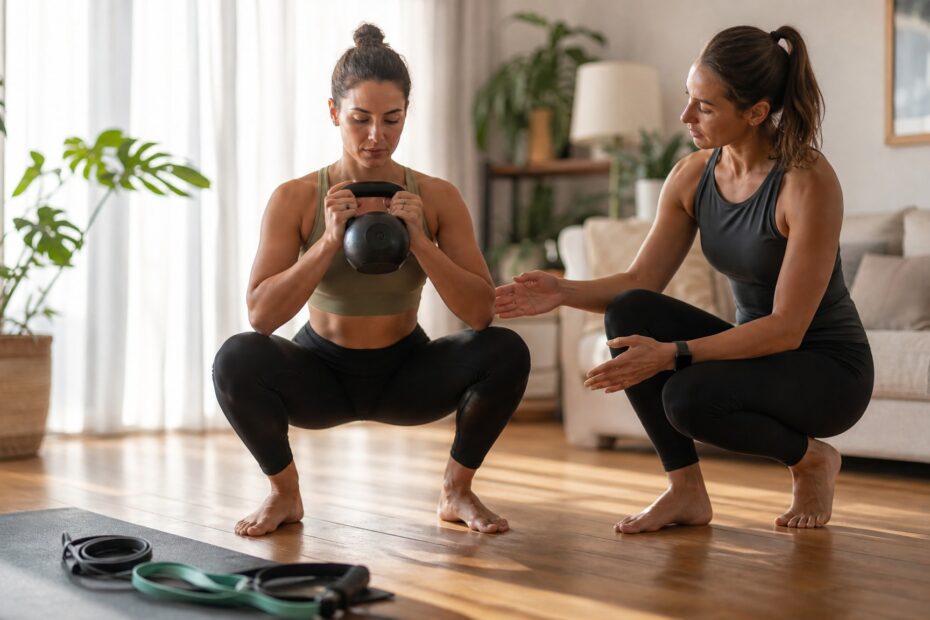
Mobile in-home training and live online coaching are two separate service models, each suited to different lifestyles. Mobile personal training brings a qualified coach directly to your home, workplace, or local park with all the equipment needed, giving you the hands-on oversight of a studio session without the commute. Live online personal training connects you with a dedicated coach via real-time video for interactive programming and form correction, which suits travellers or anyone whose location changes week to week. Neither option requires a gym membership, so professional coaching stays accessible regardless of where you live or work.
Think of these personal training options in Australia as complementary tools rather than competing products. Some clients use mobile sessions to build foundational strength before moving online; others switch between formats as their work schedule shifts through the year. What matters is how each model handles accountability and convenience against your specific constraints.
In-Home Personal Training Benefits for Busy Lifestyles
Cut the travel time and you create space for exercise in a schedule that otherwise has none. When your trainer comes to you, the twenty-minute drive to and from a gym becomes free time for other priorities, and a ninety-minute round trip turns into a focused forty-five-minute session.
How Mobile PT Fits Around Work and Family
Parents and mid-career professionals often find that the benefits of mobile personal training go well beyond the physical results. Training at home means you can stay close for school pickups, work calls, or household jobs that would be impossible if you had to leave the house. That proximity cuts the mental load of planning workouts around outside logistics, so exercise starts to feel like a normal part of your day instead of an interruption.
The privacy also matters for anyone returning to fitness after a break, or managing body image concerns. You can focus on the movement itself without a crowded gym floor watching, which tends to speed up both confidence and progress.
Equipment and Space Requirements at Home
Mobile trainers arrive fully equipped to your home, workplace, or local park, so there’s no need to buy your own gear or join a facility. You don’t need dumbbells, resistance bands, or any specialised equipment to get the in-home personal training benefits. A clear floor area roughly the size of a yoga mat is usually enough for effective strength and conditioning work, which makes this workable even in a small apartment.
Your trainer adapts the session to whatever space you actually have. If the weather’s good, sessions might move to a nearby park for variety; if the indoor space is tight, exercises get modified so the intensity holds without needing more room.
Is Online Personal Training Worth It for Real Results?
Live online sessions prioritise real-time form correction and interactive programming over pre-recorded content, because that’s what keeps remote training safe and effective. That distinction separates genuine online personal training Australia offers from passive app-based plans that can’t adjust to how you’re moving or feeling that day. When you train live, your coach watches every rep, gives you cues on the spot, and adjusts intensity based on what they see through the camera.
Is online personal training worth it if you value feedback? Yes, provided the sessions are live and interactive rather than automated.
Live Online PT Sessions vs Pre-Recorded Programs
Pre-recorded programs can’t respond fast enough for safe progression, especially for beginners or anyone managing an injury. Live online PT sessions keep the same accountability structure as face-to-face training: scheduled appointments with a real person who knows your history and your goals. Your coach can spot compensatory patterns, adjust tempo, and push you exactly when fatigue sets in, so the session earns the adaptation instead of just burning time.
That real-time back-and-forth also means the program can shift based on how you feel that day. If you’re recovering poorly or dealing with unexpected soreness, your trainer can change course on the spot rather than force you through a plan that no longer fits.
Maintaining Accountability Without Physical Presence
Consistency remains the main driver of fitness outcomes. That’s why the real choice between formats comes down to which one you can actually sustain long-term. Online training holds accountability through scheduled check-ins, shared progress tracking, and the simple social contract of showing up for a live session. Many clients find logging on from anywhere actually increases how often they train, especially in busy stretches when travelling to a session would mean skipping it altogether.
You still get full access to live online personal training options that include regular reassessments and program updates, so your training keeps evolving rather than stalling.
Online PT vs Mobile PT: A Direct Lifestyle Comparison
Deciding between online PT vs mobile PT means being honest about your weekly rhythm rather than picking a theoretical favourite. Mobile training is the most convenient option if your location and schedule are stable, while online sessions give you geographical freedom if you travel often, work FIFO, or split time between more than one home.
Neither format beats the other outright. Each solves a different problem.
Scheduling Flexibility and Session Frequency
In-home coaching tends to suit clients who need routine, and who find it hard to exercise on their own. A trainer arriving at a fixed time gives you external structure that protects that slot from everything else competing for it. Online training bends more easily around a reschedule, and it can fit shorter, more frequent sessions between meetings or over a lunch break, with no travel time attached.
Think about how your workload shifts across the weeks or seasons. If it’s unpredictable, online sessions may give you the flexibility to keep the momentum going. If you do better with ritual and an external commitment, mobile visits give you the anchor that keeps you showing up.
Cost Considerations and Value Over Time
Value in personal training goes beyond the hourly rate. It’s about time saved, consistency built, and results actually reached. Mobile training skips the fuel costs, parking fees, and membership fees while still giving you premium convenience. Online training brings the session cost down further while keeping the same professional oversight, which makes a higher training frequency realistic on a similar budget.
The most cost-effective option is always the one you actually attend. A cheaper session you skip three times a month is worth less than a premium session you never miss, so weigh the cost against how likely you are to actually show up, not just the price on the page.
Matching Training Styles to Specific Fitness Goals
Different goals respond better to different levels of hands-on supervision and environmental control. Beginners building a strength foundation, or clients coming back from injury, usually get the most from the hands-on cueing that mobile PT provides. Established exercisers maintaining a routine through a busy stretch of work often do just as well with online support.
Your current fitness level and specific goals should guide the choice more than a general preference for one format.
Weight Loss and Strength Building at Home
For weight loss and strength building, beginners often need tactile feedback and close observation to learn proper movement patterns safely. Mobile coaches can physically demonstrate a position, give manual cues, and make sure the load progresses at the right pace without risking injury. That faster skill acquisition builds confidence sooner than learning it alone, and that early momentum is what carries people through to long-term consistency.
Once the movement patterns are locked in, many clients move successfully to online formats for maintenance or continued progress with less supervision.
Specialised Coaching for Seniors and Postnatal Recovery
Professional coaching stays fully accessible for seniors and postnatal clients outside a gym setting, through both mobile and online delivery. In-home coaching for older adults works on balance, mobility, and functional strength in the exact environment where those skills matter most. Postnatal clients get the privacy and personal pacing that fits their recovery timeline, without navigating a public gym floor.
Exercise physiology services are available through both formats for clients managing chronic conditions or rehab protocols. These sessions build medical considerations into practical programming, so safety holds regardless of which delivery method you choose.
Choosing the Right Personal Trainer for Your Needs
The format matters less than finding a qualified professional who understands your specific situation and communicates well. Learning how to select a qualified trainer means checking credentials, asking about experience with clients like you, and paying attention to how they communicate in that first consultation. The best format is the one you’ll actually keep attending, so weigh compatibility over any theoretical advantage on paper.
Ask potential trainers about their experience with your specific goals, age group, or health considerations. Ask for references from clients with a similar profile, and notice whether they actually listen or just default to a generic plan.
Trust comes from demonstrated skill and real engagement, not a marketing line.
Getting Started with Professional Coaching Today
Your decision should come down to your lifestyle constraints, your current fitness level, and what you can realistically sustain, not an idealised version of your week. If travel time is what derails you, choose mobile. If an unstable location is the problem, choose online. If you’re still not sure, a consultation can clarify which approach actually fits your circumstances and goals.
Many Australians stay fit without a gym membership, as covered in our guide on staying fit without a gym membership, by picking a delivery model that respects their actual life rather than an aspirational one. Contact Fitness Inside Out to check availability in your suburb, or ask about online session times that work with your schedule. The first step toward results that last starts with picking the format you’ll actually use.