
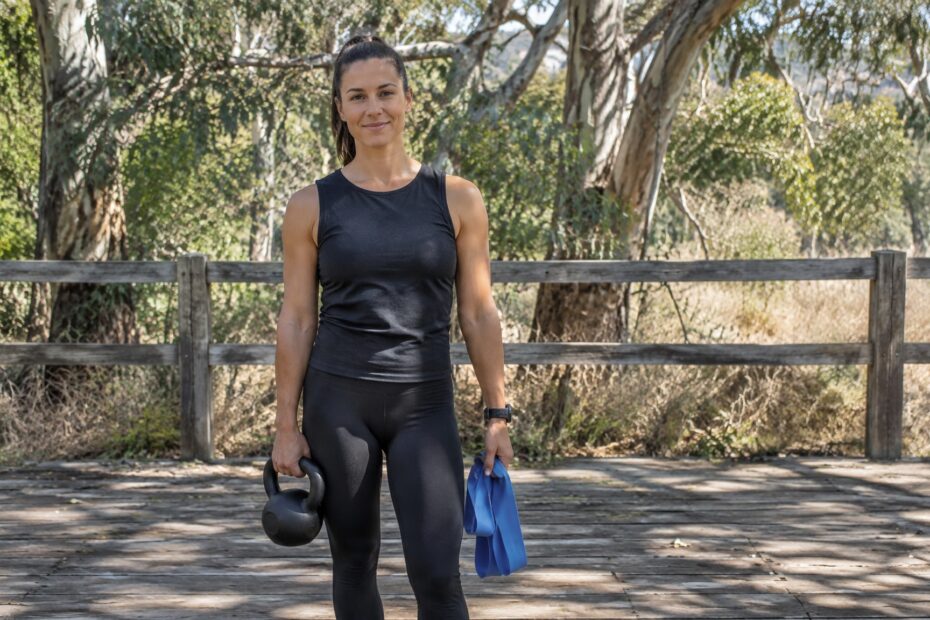
Your trainer comes to you. That’s the whole idea behind mobile training on the Central Coast. Your session happens in your lounge room, at your workplace, in a local park, or live online, so there’s no gym to drive to and no membership to feel guilty about.
It also changes how a quote gets built. Instead of a flat gym fee, you get a price shaped around you: your suburb, your session type and how often you train. This guide walks through each of those so you know what you’re looking at when a quote lands in your inbox.
What Drives Personal Trainer Cost on the Central Coast
Three things do most of the work: session type, travel and location, and how often you train. Everything else is detail.
Session type is about the trainer’s time. A 1-on-1 session gives you the trainer’s full attention. A 2-on-1 or small group session spreads that time across more people.
Travel and location cover where the session happens and how far the trainer has to go to reach you. A trainer who drives to your home has a different day from one who coaches you online.
Frequency is how often you book. A planned weekly routine is easier for a trainer to schedule than a single visit that has to stand on its own.
Because those three move independently, there’s no single typical rate across the Central Coast. Someone in a shared backyard session twice a week and someone booking a one-off 1-on-1 in a different suburb are buying quite different things, so the accurate answer is always a quote built on your suburb, your goals and your schedule.
Fitness Inside Out was founded by Jacqueline Zonneveld and Jude Tarran, and it already serves clients on the Central Coast, alongside Sydney, Wollongong, Melbourne and Brisbane. If you want the wider Australian picture first, the national cost factors page covers it, and the rest of this guide narrows the same ideas to your patch.
Session Type: How Format and Group Size Shape Your Price
The service menu spans 1-on-1, 2-on-1, small group and online personal training, plus mobile exercise physiology. The format you pick is part of the quote conversation from the very first message.
1-on-1, 2-on-1 and Small Group Sessions
The trainer’s time is the main cost. Every session needs planning, setup, coaching and the drive there, and that effort doesn’t shrink just because more people turn up.
So shared sessions often lower the cost per person. You split the trainer’s time with a partner or a few others, and each of you pays a share.
Picture a couple training together in their backyard. Each usually pays less per person than they would for a separate 1-on-1 session, but the trainer still plans and runs the full session.
The trade-off is attention. With 1-on-1, every rep, every adjustment and every bit of encouragement is yours. In a 2-on-1, you share it with one other person. In a small group, you share it with a few more.
Small group isn’t the right pick if you’re rebuilding after an injury or need constant technique correction. In that case, 1-on-1 is usually the better fit, and mobile exercise physiology may be worth raising with your trainer.
Not sure which suits you? This breakdown of one-on-one or small group training helps you weigh attention against cost per head.
Online Sessions Compared With In-Person Training
Online sessions are live. Your trainer coaches you in real time over video, and you train wherever you’ve got a bit of space.
The big difference is the cost base. No one has to travel, so the time a trainer spends getting to you drops out of the picture. That can change how a quote is put together.
It doesn’t guarantee a lower price, though. You’re still paying for the trainer’s expertise, program design and session time. What you gain is flexibility, plus the option to train from anywhere, including when you’re travelling.
What you give up is hands-on feedback and the trainer’s physical presence with equipment. Some people love that trade, and others miss it within a fortnight. The guide on online versus in-person sessions lays out both sides so you can decide with your eyes open.
How Travel Zones Shape Mobile Personal Trainer Pricing on the Central Coast
A mobile trainer sells you time, and some of that time is spent on the road. That’s why location shows up in a quote at all.
Some mobile trainers price by distance or zone, so it pays to ask how your suburb is handled. Every business sets this up its own way, and a quote that accounts for it is the honest one. For a detailed breakdown, see mobile pricing on the Central Coast.
In-Home Trainers on the Central Coast: What Changes Your Quote
Where you train matters as much as how far the trainer drives. Each setting is a slightly different job.
- At home: The trainer comes to your door. Your space and the gear you already own shape the session, and the trainer brings what’s needed to fill the gaps.
- At your workplace: Access, parking and available space all come into play, and a lunchtime or early slot suits plenty of busy people.
- At a local park: The setup is simple and the space is generous, but the trainer needs somewhere practical to meet you.
Each case involves a different amount of travel and setup. That’s why an in-home trainer on the Central Coast will ask for your address before quoting.
New to the model? Here’s how a trainer that travels to you works, step by step.
Personal Trainers in Erina and Gosford: What Changes by Suburb
Erina and Gosford make handy reference points because they’re two of the Coast’s best-known areas, and people often search for a personal trainer in Erina or a personal trainer in Gosford by name.
The suburb you live in affects how far a trainer travels, how many sessions they can fit into one trip and how easily they can reach you. Two clients in neighbouring suburbs might get slightly different quotes for that reason alone, and the difference says nothing about the quality of the training.
If you’re comparing personal trainers on the Central Coast, give each one the same suburb and the same goal. That way you’re comparing like with like.
How Often You Train: Frequency and Commitment in Your Quote
How often you train changes your quote more than most people expect. A trainer who sees you every week can plan their day around you, and that efficiency often shows up in the per-session rate. You’re not just booking a session, you’re booking a rhythm.
One-Off Sessions Versus Regular Training
A one-off booking has to cover the full cost of that single visit: the planning, the travel and the time held in the diary.
Regular training spreads that cost out. The trainer knows when they’ll be in your area, and can build your sessions in around other clients nearby.
There’s a results angle too. Picture a commuter who books a fixed weekly slot before work. Training stops being something squeezed in when there’s time and becomes part of the routine.
A single session is a fine way to try the service, but it won’t build fitness by itself. If your goal is weight loss, strength or staying active as you age, results come from repeat visits.
Commitment Length, Block Bookings and Cancellation Terms
Commitment length, block bookings and cancellation terms all change the arrangement. A longer commitment or a block of sessions may be treated differently from a pay-as-you-go booking, and cancellation terms decide what happens when life gets in the way.
Ask how each of these applies to your quote. Trainers set these terms differently, and the details matter more than the headline rate.
Getting Results Without a Gym: Comparing Value, Not Just the Rate
A gym membership looks cheaper on paper. Then the winter mornings arrive, the drive feels long, and the card sits in your wallet.
A session you actually turn up to is worth more than a membership you don’t use. That’s the real comparison, and it’s why value beats rate.
Mobile sessions take out the commute, the waiting for equipment and the self-consciousness that stops a lot of people walking through the door. Someone else is also expecting you at a set time, which does wonders for consistency.
Mobile Training Versus a Gym Membership
Count everything, not only the sticker price. Travel time, petrol, how often you go and what you get out of each visit all belong in the sum.
A gym gives you equipment and space. It doesn’t give you a program built around your body, a coach who notices when your form slips, or a person waiting at your door. If you already train confidently on your own, a gym may serve you well, and mobile training isn’t for everyone.
If you’ve tried and lapsed before, the comparison tilts the other way. The guide to personal training compared with a gym membership goes through it in more depth.
Whatever your suburb, great training is within reach. You don’t need a gym nearby to get fit, lose weight or build strength.
What to Check Before You Compare Personal Trainer Quotes
Two quotes can look similar and cover very different things. Before you compare, confirm these points with each trainer.
What’s included. Find out the session length, whether the trainer designs a program for you, what equipment they bring and how much experience they have with your goal. A trainer who has helped people with your exact goal is worth more than one who hasn’t.
How travel is handled. Ask how your suburb is treated, whether travel is built into the rate or listed separately, and whether the answer changes if you train at home, work or a park.
Cancellation and rescheduling. Get the terms in plain words. You want to know what happens if you’re sick, if work runs over or if the weather turns.
How frequency changes the rate. Ask what you’d pay per session at one visit a week compared with two or three, and whether a block booking changes anything.
A quote that answers all four clearly is a good sign. One that dodges them is worth a follow-up question before you commit.
Getting a Personal Training Quote on the Central Coast, NSW
The easiest way to get an accurate quote is to ask for one. Have these details ready and your reply will be tailored to you:
- Your suburb
- Your preferred session type: 1-on-1, 2-on-1, small group or online
- How often you’d like to train
- Your goals
- Any injury history
Injuries matter. They help your trainer plan safe sessions from day one, and they may be a reason to look at mobile exercise physiology.
When you’re ready, request a quote through the Contact page. Send the details above and you’ll get a reply built around your situation, rather than a generic rate.
Then the hard part is done. Your trainer comes to your home, your workplace or your local park, and all you have to do is turn up in your runners.
Frequently asked questions
How much does a personal trainer cost roughly on the Central Coast?
There’s no single rate, because the price depends on session type, travel and location, and how often you train. A shared weekly session in your own suburb will be priced differently from a one-off 1-on-1 further afield. The accurate figure comes from a quote built on your suburb, goals and schedule.
Is a shared session cheaper than 1-on-1 training?
Usually, yes, per person. A 2-on-1 or small group session splits the trainer’s time between you, so each person’s share is often lower. You get less one-to-one attention in return, so choose 1-on-1 if you need close technique coaching.
Does online personal training cost less than in-person sessions?
Not automatically. Online sessions remove the travel, which changes the trainer’s cost base, but you’re still paying for their time, expertise and program design. Ask for both options in your quote and compare what each includes.
What details do I need to get a personal training quote?
Have your suburb, preferred session type, how often you want to train, your goals and any injury history ready. With those, the reply can be tailored to you. You can send them through the Contact page.