
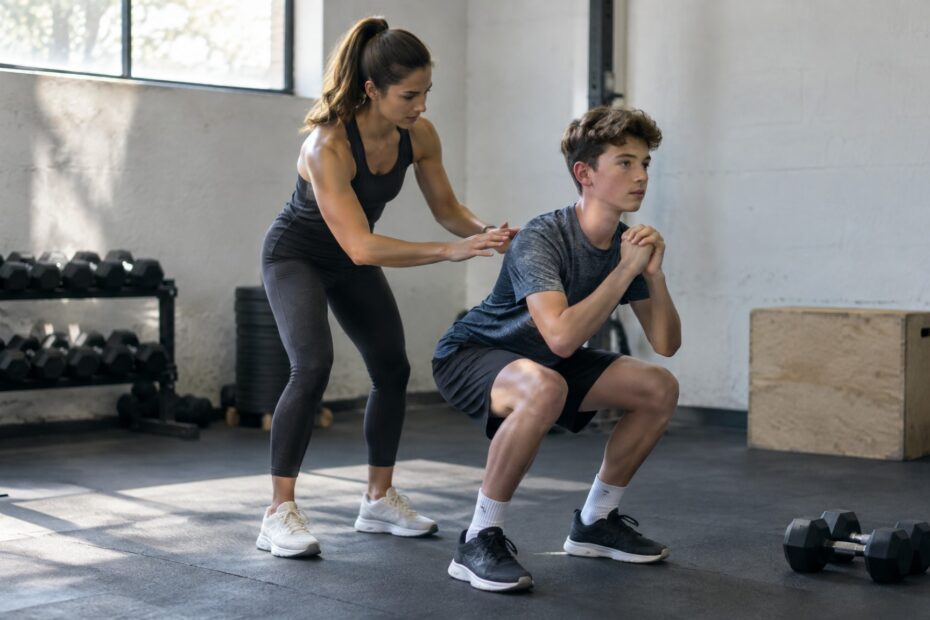
Your teenager wants to get fitter, stronger or better at their sport, and you want to make sure the person guiding them is the right one. Fair enough. Knowing how to choose a personal trainer for your teenager comes down to five checks: qualifications, child safety clearances, sensible programming, communication style and red flags.
This guide walks you through each one, so you can judge any trainer or provider with confidence.
Decide Whether Your Teenager Needs a Personal Trainer
Age alone doesn’t settle the “should my teen train at all” question. What matters is whether your teenager will be supervised, whether someone will teach them good technique, and whether they actually want to do it.
Strength-building activity is already part of Australia’s physical activity guidelines for young people, so lifting, bodyweight work and resistance training aren’t off-limits for teens. Done with good coaching, they’re a normal part of staying active.
A trainer isn’t always the answer. If your teen already gets regular school sport, club training and a supervised group session now and then, that may be plenty. If you’re weighing a personal trainer or a gym membership, remember that a gym gives access to equipment but no one to check form or notice when a session is too much.
A trainer makes the most sense when your teen is keen but unsure where to start, wants to build skills for a sport, or feels self-conscious in a gym.
Choosing a Format: Home, Online, Small Group or One-on-One
Each format suits a different teen, so match it to the three things above: supervision, technique and willingness.
- One-on-one: the most attention on technique. It suits a teen who is shy, new to training or working on a specific skill.
- Small group: friends or siblings train together, which can lift motivation. The trainer’s attention is shared, so it works best for teens who already move with confidence. Small group or one-on-one training is worth comparing if you’re torn.
- At home or outdoors: no travel, no crowded gym floor, and you’re close by. Fitness Inside Out, founded in 2001, brings trainers to homes, workplaces and local parks, so families can compare settings.
- Online: live sessions suit teens with a packed week or families outside the major cities. Online or in-home sessions each have trade-offs, and a teen who needs hands-on correction may do better in person.
If you also have a younger child who wants to join in, there’s a separate guide to fun, safe fitness for kids at home.
Set Goals and Health Checks Before You Search
Start with your teenager, not the trainer. Ask them what they want to get out of it, and let them answer in their own words. Good goals sound like “I want to get faster for netball”, “I want more energy for school” or “I want to feel more confident.” Goals about appearance or body size are a poor starting point for any teen.
You’ll find a trainer much more quickly once you know the goal, because you can ask each one how they’d approach it. It also keeps your teen invested, since the plan is theirs.
Next, think about health. If your teen has an injury, a medical condition or ongoing pain, see your GP before you shortlist anyone, and take the GP’s advice back to the trainer. If the teen needs structured rehabilitation or has a clinical condition, an accredited exercise physiologist is the right professional, and this comparison of exercise physiologist or personal trainer for injury recovery explains the difference.
This guide stays general on purpose. It doesn’t replace medical advice, and if weight is the main concern, there’s a dedicated page on safe support for teenagers who want to lose weight.
Check a Trainer’s Qualifications and Teen Experience
Anyone can say they’re a trainer. Your job is to ask for proof, and a good trainer won’t mind.
What a Qualified Trainer for Teens Should Hold
A qualified trainer for teens should be able to show you three things:
- A nationally recognised fitness qualification, such as the Certificate IV in Fitness.
- A current first aid certificate that includes CPR. Check the date, because these expire.
- Public liability insurance, which protects you if something goes wrong.
You can check the qualification and the provider that issued it on the national training register at training.gov.au. It takes a few minutes and tells you the course is real.
A certificate shows a trainer has the basics. It doesn’t tell you whether they’re good with teenagers, and that’s the next question.
Experience That Matters With Growing Teens
Teenagers aren’t small adults. They hit growth spurts, their coordination can drift for a few months, and two 14-year-olds in the same class can be at very different stages of physical maturity.
A trainer with real teen experience understands this and adjusts for it, and you can find out by asking a few direct questions:
- Which age groups do you usually train?
- How have you changed a session for a younger or less confident client?
- What do you do when a teen’s technique slips during a growth spurt?
Listen for specific, practical answers. A trainer who has worked with teens will have examples ready, while one who hasn’t tends to fall back on generalities.
Confirm Child Safety Checks and Safeguarding Rules
A fitness qualification and a child safety clearance are two separate things. You need both, because one does not replace the other.
Child Safety Clearances: What to Ask to See
The clearance depends on your state:
- NSW: a Working With Children Check
- Victoria: a Working with Children Check
- Queensland: a Blue Card
Each is a state screening of criminal history relevant to working with children, and other states and territories run equivalent schemes. Ask to see proof that the clearance is current, and don’t take a verbal “yes” as an answer. A professional trainer expects the question.
Session Rules That Protect Your Teen
A safe PT for teenagers works inside clear rules, and you should know them before the first session. Look for these:
- A parent or another adult nearby for the early sessions, even if you’re only in the next room.
- Training in a shared space such as a living area, backyard or park, not a bedroom. That applies to online sessions too.
- Communication through you or through a group channel, not private messages to your teen.
- A written safeguarding policy that includes a clear way to report a concern.
If a trainer can’t tell you their rules, or treats the questions as an insult, treat that as an answer. Because rules like these protect the trainer as well, a good one is usually glad to explain them.
Look for Teen-Appropriate Programming
Your teenager’s program should look different from an adult’s. For teens, the first priority is technique and the habit of turning up, not how much weight is on the bar.
A sensible program builds in gradual increases and proper recovery. It doesn’t chase a number on the scale or a personal best every week, and it doesn’t treat soreness as proof of progress.
What a Sensible First Few Sessions Look Like
Use these teen personal trainer tips as a checklist for the first fortnight. A sound start usually runs like this:
- A goals conversation. The trainer asks what your teen wants, and listens.
- A review of sport and activity history. This covers what they play, what they’ve done before and any past injuries.
- A basic movement check. Squatting, hinging, pushing, pulling and balance show where to start.
- Light, technique-focused work. Light loads, simple patterns and plenty of coaching cues.
Heavy loading comes later, once the technique is solid and recovery is part of the weekly plan.
Be cautious if a trainer wants a one-rep-max test in the first few weeks. Maximal lift testing is a poor fit for a teen who is still learning the movements.
Equally, if a trainer sets targets around appearance or weight, that’s a warning sign, however kindly it’s put. A good program sets goals your teen can feel, like running further, lifting with better form or getting through a game without tiring.
Judge Communication Style in a Trial Session
A trainer can hold every certificate and still be wrong for your teenager. The only way to find out is to watch them work, so book a trial or initial assessment and stay close enough to see it.
How a Good Trainer Talks to a Teenager
Watch for these four things:
- They speak to your teen directly. You’re welcome to be there, but the conversation is with the teenager, not about them.
- They explain why each exercise matters. Teens switch off when a drill feels pointless.
- They praise effort, not comparison. “Good work holding that position” is the right tone. Measuring your teen against siblings, friends or other clients isn’t.
- They notice mood. A self-conscious or bored teenager gives off signals, and a good trainer adjusts the session rather than pushing on.
After the session, ask your teen how it felt. Their answer is worth more than any sales pitch.
Questions a Parent Should Ask a Teen Fitness Coach
Work through this short set before you commit, as part of any parent guide to teenager fitness coaching:
- How often will you update me on progress, and in what form?
- What will you share with me, and what stays between you and my teen?
- What do you do when my teen doesn’t enjoy a session?
- If my teen wants to stop, how do you handle that?
The last two matter most. A good trainer talks about changing the activity or the approach, and respects a teen who says they’re done. A poor one talks about pushing through.
Watch for Red Flags Before You Commit
Use these as a checklist for any trainer, not a ranking of providers. One red flag is a reason to ask more questions, and two or more is a reason to walk away.
- Promises of fast results.
- Pressure to sign up before a trial session.
- Comments about your teen’s body shape or weight.
- Advice on supplements or restrictive diets.
- Private messaging or social media contact with your teen.
Any of these should make you stop. Good coaching doesn’t need hype or pressure, and it doesn’t need a private line to your child.
Once you have a shortlist, run it through the checks above and explore our kids fitness options. If you’re still weighing formats, start with the guides to small group or one-on-one training and online or in-home sessions linked earlier.
Frequently asked questions
Should I let my 14-year-old go to the gym?
Age alone doesn’t decide it. What matters is supervision, good technique coaching and whether your teen wants to go. A trainer or an experienced adult who can check form is a safer start than a teen training alone on a busy gym floor.
How do I choose a personal trainer?
Check that they hold a nationally recognised fitness qualification such as the Certificate IV in Fitness, current first aid with CPR, and public liability insurance. For a teenager, also ask to see a current child safety clearance, then book a trial session to see how they talk to your teen.
What child safety clearance should a trainer for teenagers have?
In NSW and Victoria, ask for a Working With Children Check. In Queensland, ask for a Blue Card. A fitness qualification doesn’t replace it, and you can ask for proof that it’s current.
Does my teenager need a personal trainer if they already play sport?
Not necessarily. Regular school sport, club training and a supervised group session can cover a teen’s needs. A trainer helps most when your teen wants to build a specific skill, feels unsure in a gym, or needs technique coaching alongside their sport.
Should I stay for my teenager’s training sessions?
Stay nearby for the early sessions, whether that’s at home, in the park or during an online session. It lets you see how the trainer coaches and how your teen responds. Over time, you can step back, as long as communication still goes through you and sessions stay in a shared space.