
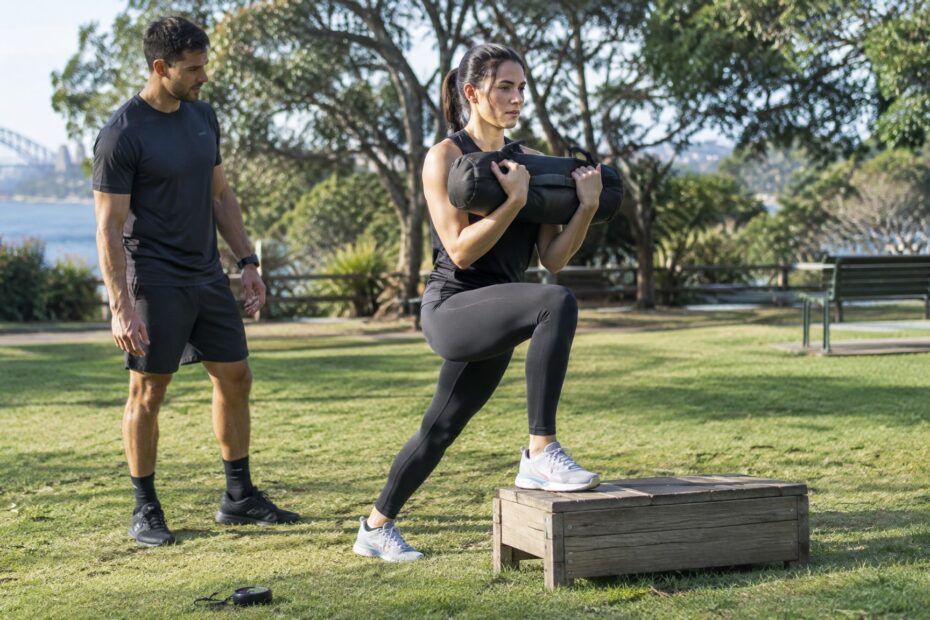
We come to you. Your trainer turns up at your home, a local park or your workplace, or coaches you live online. If you’re preparing for a police, defence, fire, ambulance or corrections entry test, that means you can train for the job without joining a gym or rearranging your week.
Fitness Inside Out is an Australian mobile and online personal training company, founded in 2001 by Jacqueline Zonneveld and Jude Tarran. This guide explains how a personal trainer for fitness test preparation in Sydney works, what the tests have in common, and how to pick the right coach.
Why job fitness test coaching differs from general gym training
Most gym routines build a nice-looking, generally fit body. Entry tests ask something narrower: can you do the physical tasks of the job, in order, without running out of puff?
That gap catches people out. You might lift well and still struggle when a stair climb follows a run, or when a heavy carry lands on tired legs.
Entry tests tend to share the same building blocks:
- An aerobic or run-based element
- Muscular endurance, such as repeated pushing, pulling or holding
- Strength for lifting and moving loads
- Job-style tasks like stair climbs, carries, drags and obstacle-style courses
General gym programs often skip that last group entirely, and a coach who works from your actual test description can build every one of these into your week while keeping the sessions short enough to fit around a full-time job.
This approach is not a shortcut. It won’t replace the training time you need, and it can’t promise you a pass, because the result on the day is yours to earn.
Entry fitness tests we prepare candidates for in Sydney
Each employer sets its own test and its own standards. The NSW Police Force, the Australian Defence Force, Fire & Rescue NSW, NSW Ambulance and Corrective Services NSW all run different assessments, and those assessments change over time.
So your reference point is always the agency’s current published test description. Download it, read it, and bring it to your first session. We are not affiliated with any of these employers, which is exactly why we work from their published material rather than guesswork.
Police and ADF fitness test prep
Police and ADF candidates usually face a mix of running, muscular endurance and task-based work. The details differ between the two, and between roles within the ADF.
Because the ADF has its own detail and deserves proper space, we’ve covered it separately. If that’s your path, read our page on the ADF fitness test at home for the deep dive.
Police candidates follow the same process as everyone else here: your trainer reads the current NSW Police Force test description with you and builds the plan from it.
Firefighter, paramedic and correctional officer fitness test prep
Firefighter fitness test training in Sydney leans on the physical demands of fireground work. Think stairs, carrying equipment, dragging and obstacle-style tasks, all done with a raised heart rate.
Paramedic fitness test prep focuses on different strengths. You need the endurance and back-friendly strength to lift, carry and move people and equipment, often in awkward spaces.
Correctional officer candidates face their own mix of aerobic work and job-style tasks. Other uniformed entry tests usually draw on the same building blocks, so a trainer can adapt the same framework to whichever test you’re sitting.
Our emergency services fitness training covers these roles, and you don’t need to know your exact weak spots before you start. Your first session sorts that out.
How a personal trainer builds your fitness test preparation plan
One framework sits underneath every role: an aerobic base, strength, muscular endurance and the ability to carry loads. Your trainer adapts the balance for police, ADF, fire, paramedic or correctional work.
The test description is the map. The plan is the route to it.
Start with a baseline and a breakdown of your test
Your first session is a baseline. You bring your agency’s current test description and your test date, and your trainer checks where you stand today.
Then comes the breakdown. Your trainer takes each component of the test and ties it to a training target, so you know which parts need the most work and which you can maintain. A candidate who runs comfortably but struggles with carries gets a very different plan from one who lifts well and tires on the run.
Your test date sets the calendar. A long runway means more time on base fitness, while a short one means starting test-specific work sooner.
Build in phases and rehearse the job tasks
Training moves through phases rather than fixed numbers, because loads and timing depend on your starting point.
- Base-building. You develop your aerobic fitness and general strength, and you fix movement habits that could cause trouble later.
- Strength and muscular endurance. Loads go up gradually, and you practise holding quality when you’re tired.
- Test-specific work. Stairs, carries, drags and obstacle-style tasks enter your sessions, so the movements feel familiar well before test day.
- Full mock run. You go through the whole test in order, as close to the real thing as the venue allows, so you learn your pacing and find any weak links while there’s still time to fix them.
- A lighter final stretch. Volume drops so you arrive fresh instead of flat.
Stairs, hill or sand runs and load carries can be rehearsed at a local oval, park, beach or building stairwell where access allows. You don’t need a gym membership to do any of it.
Fitness for busy lifestyles: training around shifts, study and family
Most candidates aren’t training full-time. You’re working rosters, studying or getting kids to school, and a rigid gym timetable is usually the first thing to fall over.
That’s why we bring the session to you. Your trainer can meet you at home, a local oval, a park or a stairwell near your workplace, and switch to an online session on the days your roster changes. If you’ve lapsed on gym memberships before, this removes the travel and the excuses that came with them.
For more on this style of coaching, see our page on training around a busy work week. If you want to know the logistics, here’s how a trainer who comes to you works.
Mobile, outdoor and online sessions that fit your week
Pick the format that suits your life:
- 1-on-1: Your trainer’s full attention, and a plan built around you alone.
- 2-on-1: Train with a partner, such as a friend sitting the same test, and keep each other turning up.
- Small group: A bit of company and healthy competition, which suits a lot of people practising for a team-based job.
- Online: Live coaching from anywhere, handy for travel, night shifts or last-minute roster changes.
We serve Greater Sydney, along with the Central Coast and the Illawarra. Online sessions work wherever you have a connection.
Choosing the right personal trainer for your entry fitness test
Plenty of trainers can write you a workout. Fewer know how to prepare someone for a specific employer’s assessment, and that difference matters when you’ve got a test date on the calendar.
If you’re new to hiring a trainer, start with our beginner’s guide to mobile personal trainers in Sydney, then use the questions below to shortlist.
Questions to ask before you book
A good entry fitness test personal trainer should answer these clearly:
- Test-specific experience: Have they prepared people for tests like yours, and will they work from the current published description?
- Baseline assessment: Will you be assessed before the plan is written?
- Clear progression: Can they show how the program moves from base fitness to test-specific work?
- Mock sessions: Will you rehearse the full test before the real one?
- Progress tracking: How will you both know you’re improving?
- Injury handling: What happens if something flares up, and who do they refer you to?
- Qualifications: Are they properly qualified, and will they show you?
If a trainer can’t answer these plainly, keep looking.
Warning signs of a generic program
Watch for a plan that looks the same as everyone else’s. A trainer who hands you a standard circuit without ever reading your test description isn’t preparing you for it.
Be wary of anyone who guarantees a pass, because no honest coach can control what happens on the day. Another red flag is a program with no way to measure progress: if nobody retests you along the way, you’re guessing.
Staying injury-aware while you prepare
Carries, drags and stair work put real load through your back, knees and shoulders. That’s the point of the training, but it also means an existing niggle can turn into a bigger problem if you push into it.
If you have a current or recurring injury, see your GP before you start test prep. Tell your trainer what your GP says, and they’ll plan around it.
Sometimes a rehab-focused professional is the better first call. Our article on exercise physiologist or personal trainer for injury recovery explains how to decide. We also offer mobile exercise physiology, so that route can come to you too.
Test prep coaching is not a treatment for injuries, and it isn’t a substitute for medical advice.
Book your first fitness test prep session in Sydney
Booking is simple. Tell us three things: your agency, your test date and where you’d like to train, whether that’s home, a local park or online.
Then get in touch to book through our Contact Us page. We’ll match you with a trainer and set up your baseline session, with your test description in hand.
Frequently asked questions
Can a personal trainer guarantee I’ll pass my entry fitness test?
No. No honest trainer can, because the result on the day depends on your preparation, your health and how you perform under pressure. A good trainer gives you a plan built from your agency’s test, measures your progress and rehearses the full test with you beforehand.
Which fitness test should I train for?
Train for the one your employer currently publishes. The NSW Police Force, the Australian Defence Force, Fire & Rescue NSW, NSW Ambulance and Corrective Services NSW each set their own test and standards, and those standards change. Bring the latest description to your baseline session.
Do I need a gym membership to prepare?
No. Stairs, hills, carries and drags can be rehearsed at a local oval, park, beach or building stairwell where access allows. Your trainer comes to you, or coaches you live online if that suits your week better.
I have an old injury. Can I still do test prep?
See your GP first, especially if your back, knees or shoulders have given you trouble. Carries, drags and stair work load those areas. If rehab is the priority, an exercise physiologist may be the better first call, and your trainer can work with their advice.
Can I train with a friend who’s sitting the same test?
Yes. We offer 2-on-1 and small group sessions as well as 1-on-1 and online training. Training with a partner can help you both turn up consistently, though your plan still needs to match your own test and starting point.