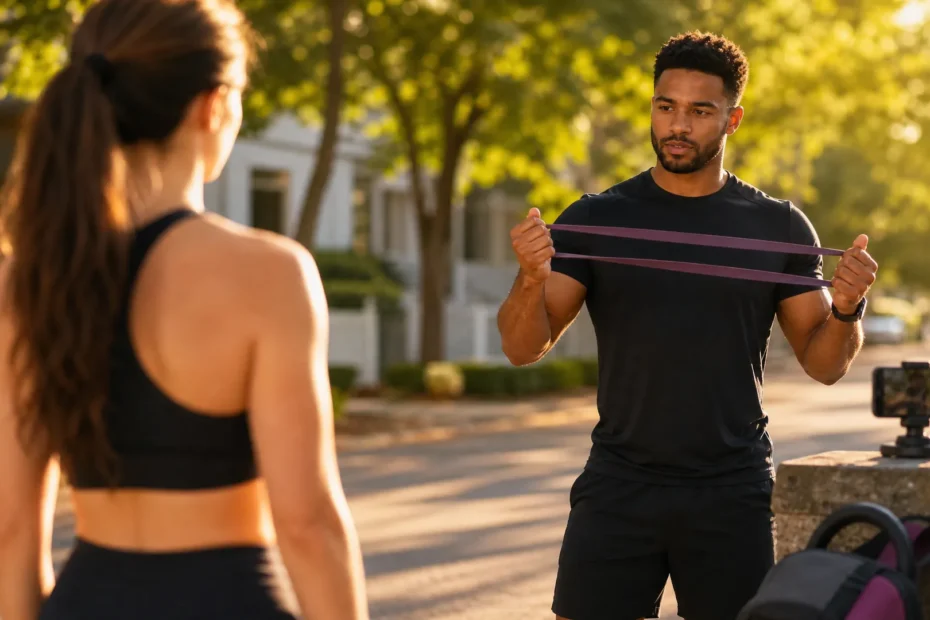
So you’ve decided to become a mobile personal trainer in Australia. Good move. The demand is there, the flexibility is real, and you won’t be stuck behind a gym desk waiting for walk-ins.
But here’s what most guides won’t tell you. Getting qualified is the easy part. Building a caseload of paying clients from scratch is where most new trainers stall out. This article covers both sides, the qualifications you need, and the part everyone skips: how to actually start earning without spending your first year cold-calling for clients.
What It Really Takes to Become a Mobile Personal Trainer in Australia
Before you can train anyone, you need the right paperwork. It’s not complicated, but it is non-negotiable. Here’s the short version, because you’ve probably read the long version elsewhere.
Certificate III and IV in Fitness: the non-negotiables
You need a Certificate III in Fitness followed by a Certificate IV in Fitness to work as a personal trainer in Australia. The Cert III covers group exercise and gym instruction. The Cert IV builds on that with the skills to design and deliver one-on-one programs safely.
Most registered training organisations run these as a combined package, either in person or online with practical placements. Expect several months of study if you’re going part-time alongside other work.
Insurance, first aid and other admin most guides skip
Once you’re qualified, you’ll need current CPR and first aid certification, renewed every 12 months. You’ll also need public liability insurance. You’re the one responsible if a client gets injured during a session.
Most trainers also register with an industry body like Fitness Australia to boost credibility with clients and some employers. None of this is hard to arrange. It’s just admin that takes time away from what you actually want to do, which is train people.
Employed, Contractor or Franchise-Style PT: Which Path Actually Suits You?
Once you’re qualified and insured, you’ve got three broad options for how to actually work. Each one comes with a very different day-to-day reality.
You can work as an employed trainer inside a commercial gym, trading flexibility for a steady base and someone else supplying the members. You can go fully independent, building your own mobile personal training business from the ground up. Or you can join an established mobile PT brand that already has systems, leads and infrastructure in place.
Why fully independent mobile PT businesses struggle early on
Going solo sounds appealing until you’re doing it. You’re not just coaching anymore. You’re marketing, invoicing, scheduling, chasing late payments and building a website, often before you’ve earned a single dollar.
Across the fitness industry, most trainers who go fully independent say the hardest part isn’t the coaching. It’s consistently finding and keeping paying clients. Many spend the first year barely breaking even while they figure out how to get in front of the right people.
How Fitness Inside Out’s model differs from going solo
Joining an established mobile PT business gives you a middle path. You get the independence of mobile work, choosing your own hours and locations, without the burden of running every part of the business yourself.
Fitness Inside Out has run mobile and online personal training across Sydney, the Central Coast, Wollongong, Melbourne and Brisbane since 2001. That history means new trainers plug into an existing client base and referral network, rather than starting from zero in a market nobody’s heard of.
Personal Training Jobs With No Clients Needed: How We Supply Your Caseload
This is the part that changes everything for a newly qualified trainer. You don’t need to bring your own clients to start working with us.
Enquiries come in through our marketing and referral channels every week, across every region we service. When a client books, we match them with a trainer who suits their goals, location and availability. You’re not waiting around hoping someone finds you. You’re getting handed real people who already want to train.
Leads, billing and scheduling handled for you
We handle the parts of the business that eat up an independent trainer’s time. Client enquiries are managed centrally, so you’re not fielding cold leads or chasing social media likes. Billing runs through our systems, so you’re not manually invoicing clients or following up on overdue payments. We coordinate scheduling so your sessions fit together sensibly across your chosen suburbs.
That leaves you free to focus on the one thing you trained for, which is coaching. A newly Cert IV-qualified trainer can go from finishing their course to running paid sessions in someone’s home or a local park within weeks, not months of cold-calling.
If you want a closer look at how this plays out in practice, how mobile coaching works in Sydney gives a good picture of the day-to-day.
Choose Your Own Suburbs, Sessions and Hours
Mobile PT work only makes sense if it actually fits your life. That’s the whole point of ditching the gym floor.
You choose which suburbs you’re willing to travel to, how many sessions you want each week, and when you’re available. Want to work early mornings before a second job, or fill your afternoons around school pickups? That’s your call, not a roster someone else built for you.
Working across Sydney, Central Coast, Wollongong, Melbourne or Brisbane
Mobile PT work lets you cover just your local Sydney suburbs, or expand across the Central Coast, Illawarra, Melbourne or Brisbane as your client list grows. You’re not locked to one postcode or one facility.
Some trainers stick close to home and build a tight, local caseload. Others spread across a wider patch as demand builds, especially in growth corridors like the Central Coast or outer Brisbane. Either way, the choice sits with you, not with a franchise territory map. There’s also room to explore trainers working across Brisbane if you’re weighing up where to base yourself.
Why Mobile Personal Training Is a Growing Career Path in Australia
Mobile personal training isn’t a niche side hustle anymore. It’s one of the more resilient corners of the fitness industry, and the trend is only building through 2026 and into 2027.
A lot of people who fell out of the gym habit during lockdowns never went back. They got used to training at home, in a park, or over video calls, and they’ve stuck with it because it’s simply more convenient. Busy professionals in cities like Sydney and Melbourne don’t want to lose an hour commuting to a gym on top of a training session. An ageing population also wants coaching that comes to them, particularly for strength and mobility work that’s safer done one-on-one in a familiar space.
That shift in preference is exactly why demand for mobile personal trainer jobs across Australia keeps climbing. It’s a genuinely different value proposition to a traditional gym. The result is steady work for trainers willing to go where clients actually are, rather than waiting for clients to come to a facility.
How to Apply and Join Fitness Inside Out as a Trainer
If you’re already qualified, or close to finishing your Cert IV, the application process is straightforward. You don’t need an existing client list, a business plan, or a marketing budget to get started.
We look for trainers who are reliable, personable and genuinely invested in helping clients get results, whether that’s weight loss, strength, or general health. Qualifications and insurance need to be current. Beyond that, we’re more interested in how you work with people than how long you’ve been in the industry.
What onboarding looks like in your first weeks
After you apply, we’ll talk through your availability, preferred suburbs, and the kind of clients you want to work with. From there, we start matching you with enquiries in your area as they come in.
Most new trainers run their first paid sessions within a few weeks of finishing onboarding. There’s no waiting around building a caseload from scratch, and no guessing whether the marketing will ever pay off.
If you want to skip the years of cold outreach and step straight into paid coaching work, explore current trainer career opportunities with us. Or if you’ve got questions first, get in touch about joining the team and we’ll walk you through what it looks like for your region. It’s also worth reading about the flexibility mobile training offers before you decide, and picturing what running sessions in local parks or a client’s living room could look like as your regular workplace.